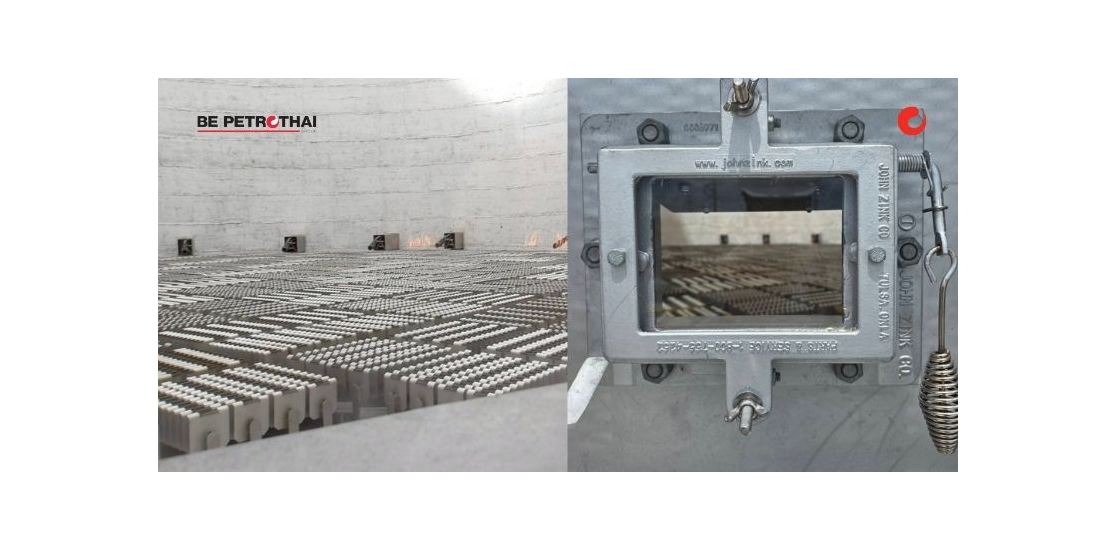
Virtual Combustion: Perfecting Performance Through Digital Simulation
After EP 1 introduced the core of Enclosed Ground Flare (EGF) technology—how it enables smokeless, silent, and invisible combustion through precise control in an enclosed chamber—and EP 2 revealed the aerodynamic engineering hidden within the “wind fence” that keeps the system stable even under unpredictable wind conditions, these two secrets lead to an important question: Before such a complex system is built, how can engineers be certain that every component will perform flawlessly?
The answer lies in EP 3—where every design is perfected in a
virtual world through advanced digital simulation technologies.
A complex aerodynamic system like this cannot rely on trial and error. Engineers from global technology leaders—such as John Zink, a key partner of BE Petrothai Group—first perfect the design in a fully virtual environment using Computational Fluid Dynamics (CFD).
More than just a standard simulation, CFD enables engineers to create a highly accurate Digital Twin of the flare system. This virtual model is used to test prototypes and evaluate risks across hundreds of design variations under different operational conditions—such as fluctuating gas compositions or extreme weather—long before the actual system is built including the impacts of its use on surrounding buildings and communities.
[1] This rigorous digital validation ensures the highest levels of reliability, safety, and performance for the final product.
In the final episode, we reveal how all these technologies come together—from design to onsite installation—to deliver a fully engineered, community-friendly flare system built for the future.